
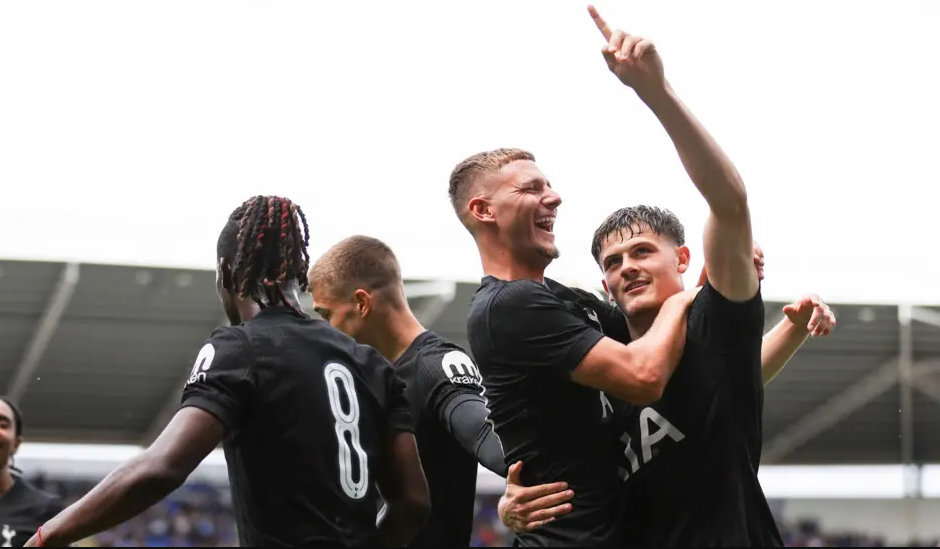

Can Jamie Donley address Northern Ireland’s longstanding striker issue? A deep dive into his readiness and the implications for the national team,
For years, the Northern Ireland national football team have struggled to find a consistent, clinical centre-forward—a “problem position” that has cost qualifying campaigns and momentum. Enter Jamie Donley. With his recent performances and growing reputation, many are asking: Is Donley ready to fill Northern Ireland’s “problem position”? In this article, we explore the question from every angle, using keywords such as Jamie Donley, Northern Ireland problem position, Donley readiness, and Northern Ireland striker issue to guide our story.
Understanding Northern Ireland’s “Problem Position”
What Has Gone Wrong at Centre-Forward?
-
Northern Ireland have lacked a consistent goal-scorer at the top of the formation—one who combines physical presence, tactical understanding and composure in big moments.
-
Several strikers have arrived with promise, only to fade or remain inconsistent.
-
As manager Michael O’Neill recently admitted: “There’s no secret the nine is a problem position for us.”
The Impact on Results and Qualification Chances
-
Without a reliable centre-forward, Northern Ireland have often dropped points or failed to convert opportunities in crucial qualifiers.
-
The issue affects not only goals, but build-up play, link-up with midfield, and the team’s ability to press effectively.
-
A “problem position” at the top can ripple through the squad, affecting confidence, structure and strategy.
Jamie Donley – Profile & Recent Form
Who Is Jamie Donley?
-
Jamie Donley (born 2005 in Antrim) is a young Northern Irish forward who has represented youth levels for England and Northern Ireland, and recently earned his senior cap for Northern Ireland.
-
He plays for Stoke City on loan from Tottenham Hotspur and is known for his technical ability, finishing and link-up play.
Recent Performance Highlights
-
Donley scored his first senior international goal for Northern Ireland from a penalty against Luxembourg national football team in a 1-0 win.
-
His manager described him as a player with “real quality… different attributes from some of the other strikers.”
Strengths That Align with the “Problem Position” Need
-
Physical profile: At 1.83m, he possesses a decent build for a centre-forward.
-
Left-footed variety: Provides variation that many previous options lacked.
-
Technical link-up: Praise for his awareness and passing range suggests he could fit into systems where the striker drops and combines.
-
Mental composure: Demonstrated in his penalty and debut performance, showing he might handle big moments.
Is Donley Ready to Solve the Problem?
Readiness Factors in His Favour
-
He has already shown he can perform at senior international level—scoring, adapting and impressing.
-
He brings youthful energy with enough experience to build on, making him a realistic candidate for immediate impact.
-
He possesses attributes that match Northern Ireland’s needs: link-play, finishing, left-footed variety, and willingness to adapt.
Areas Where More Development Is Needed
-
Consistency: While promising, he is still young and has limited senior minutes at club level. Sustained performance is required.
-
Physical resilience: Centre-forward at international level demands coping with heavy defenders, aerial battles and high tempo—areas to develop.
-
Tactical adaptation: Northern Ireland will need him to not just score, but contribute to team shape, pressing, defensive work and transitional play.
The Strategic Fit with Northern Ireland
-
If Northern Ireland continue to deploy a system that requires the striker to drop and link, Donley’s skills may align well.
-
However, if the team persists with a more static “traditional” target man, the fit may be less ideal—requiring tactical flexibility.
-
The key word here is match: Donley must not only be talented, but deployed in a way that suits his strengths and remedies the “problem position”.
What Northern Ireland and Donley Must Do Next
For Northern Ireland’s Management
-
Give Donley regular starts and minutes to build confidence and rhythm in the “problem position”.
-
Design systems that allow him to utilise his link-up and movement, not constrain him with rigid target-man role.
-
Protect and support him: managing expectations, offering mentorship and structuring matches that gradually raise his level.
For Donley Personally
-
Seek consistent club minutes, ideally in an environment that tests his physical, tactical and technical abilities.
-
Focus on improving areas such as hold-up play, aerial ability, pressing and defensive contribution.
-
Embrace the pressure of the “problem position” but treat it as an opportunity—his chance to define himself at international level.
For the Squad & Fans
-
Support the process: Recognise that solving the “problem position” is a journey, not overnight magic.
-
Provide Donley with the service, movement and support he needs: midfielders must link, wingers must stretch, full-backs must supply.
-
Accept that early matches may have hiccups—what matters is consistent deployment and belief.
Potential Impacts if the Problem Is Solved
Improved Qualification Chances
-
With a reliable centre-forward, Northern Ireland could convert more chances, control games better and earn more points in tight groups.
-
The psychological boost of having the “problem position” addressed can improve overall team confidence and structure.
Squad Evolution & Future Planning
-
Donley, if established, could become the long-term answer at centre-forward, giving Northern Ireland stability and identity up front.
-
This would allow younger players to emerge elsewhere, the system to settle and the team to build around a known attacking focal point.
Fan Engagement and National Pride
-
A successful striker often becomes a national figure, inspiring younger players, lifting fan excitement and increasing the team’s profile.
-
Solving the “problem position” may reignite belief and hope among supporters hungry for major-tournament breakthroughs.
The question Is Donley ready to fill Northern Ireland’s “problem position”? cannot be answered with a simple yes or no. What we can say is: Jamie Donley presents a promising, realistic solution for the long-standing striker issue. He has the attributes, he has started well, and he aligns with the needs of Northern Ireland. But readiness requires more than talent—it requires minutes, systems that suit him, support from club and country, and time to solidify his role. If all those align, Donley could mark the turning point in Northern Ireland’s attacking fortunes—and finally resolve the “problem position” that has dogged them for too long.