
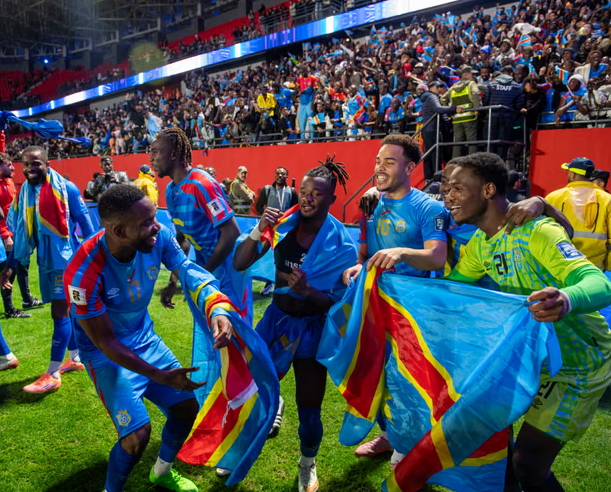

Nigeria’s World Cup dreams crumble after penalty shootout loss to DR Congo, and coach accuses opponents of practising ‘voodoo’,
In a night of high drama and bitter disappointment, the Nigeria national football team suffered a shocking exit from World Cup qualification after losing to DR Congo national football team on penalties. In the aftermath, coach Éric Chelle pointed to alleged “voodoo” by the opposing side, sparking controversy across the continent. This article explores the events of the match, the reasons behind Nigeria’s loss, the impact of the “voodoo” claim and what lessons this holds for football fans and players across Tanzania and East Africa. Keywords such as Nigeria voodoo accusation, DR Congo play-off win, and Nigeria World Cup miss feature throughout.
When two African nations battle for a lifeline to the FIFA World Cup, stakes could hardly be higher. Nigeria took an early lead, looked to control the game, but failed to close it out — and were exposed during the penalty shootout. The phrase DR Congo play-off win defines the moment the Leopards seized their chance, while Nigeria World Cup miss underlines the cost of the defeat. The post-match focus on supernatural interference — Nigeria’s coach accusing DR Congo of “voodoo” — adds a layer of cultural intrigue, yet also raises deeper questions about preparation, psychology and accountability.
First, let’s look at how the match unfolded, then examine the context of the accusation, consider the implications for both teams, and draw lessons for football communities including in Tanzania.
How the turning point unfolded
Nigeria entered the match as favourites, boasting a strong squad and international pedigree. DR Congo, by contrast, were underdogs — yet their resilience proved decisive.
-
Nigeria scored early through a deflected effort and appeared to be in control.
-
DR Congo equalised through a moment of exploitation of a defensive error, bringing the game level.
-
The match went into extra time and then a penalty shoot-out, where the pressure inverted.
-
During the shoot-out Nigeria twice failed to convert spot-kicks, and DR Congo’s goalkeeper made key saves. The phrase Nigeria voodoo accusation arose after the coach claimed he witnessed odd gestures and alleged ritual-like interference by the opposing bench.
-
Ultimately DR Congo prevailed 4-3 on penalties and secured passage to the inter-confederation playoffs, while Nigeria’s qualification bid collapsed.
The dramatic nature of the result highlights the razor-thin margins in high-stakes football. Preparation, mental fortitude and composure matter just as much as skill. The phrase DR Congo play-off win captures the underdog triumph, while Nigeria World Cup miss signals the broader consequences.
Why Nigeria’s dreams fell apart
Despite their status and resources, Nigeria were undone by a combination of factors beyond alleged “voodoo”.
Tactical and physical lapses
-
Nigeria struggled to sustain their early momentum; DR Congo pressed well and grew into the game.
-
Substitutions and tactical adjustments did not quite match the shifting game dynamics.
-
In the shoot-out the Nigerian side looked unsettled, with the sequence of misses reflecting nerves.
Psychological pressure and expectation
-
The weight of expectation on Nigeria — a football giant in Africa — may have worked against them. The phrase Nigeria voodoo accusation somewhat distracts from the more basic issue: managing stress and focus in pressure moments.
-
DR Congo had less to lose, perhaps giving them psychological freedom.
Moment of magic vs. margin of error
-
In football, marginal errors often decide outcomes: a missed chance, a moment’s lapse in concentration or a mis-timed substitution. Nigeria’s shoot-out failure owed more to execution than external interference.
-
The notion of Nigeria World Cup miss should prompt reflection on internal performance rather than external blame.
The “voodoo” claim: Symbolic or substantive?
Coach Éric Chelle’s assertion that DR Congo engaged in “voodoo” during the penalty shoot-out grabs attention. He described seeing “waving” or “shaking” gestures by the Congo bench, saying it unsettled his players. Yet the phrase Nigeria voodoo accusation must be unpacked.
-
From a cultural perspective the claim invokes the idea of ritual-based interference — a sensitive topic in West and Central Africa.
-
From a sporting perspective it raises discomfort: when coaches resort to metaphysical explanations, they risk deflecting from controllable factors such as tactics, preparation and player performance.
-
For Nigeria, the accusation may reflect anger, frustration and unwillingness to fully acknowledge internal shortcomings.
For fans in Tanzania, the episode offers a broader lesson: superstitions can spark narratives, but sustainable success comes from planning, discipline and mental strength — not external causation. The phrase DR Congo play-off win should stand as a result of competitiveness, not mystery.
Impact and implications for Nigerian football
The immediate effect of the loss and the accompanying controversy is significant.
-
Nigeria will miss the World Cup for a second consecutive time — a huge blow for their players, federation and fans.
-
The federation may face scrutiny: structure, leadership, player pathways and coaching choices will come under question.
-
The “voodoo” claim adds reputational risk: media focus on superstition overshadows tactical and structural analysis.
For African football overall, the shock exit of a big nation reinforces that qualification is no longer predictable. Smaller nations like DR Congo now demonstrate that with focus and investment they can force results. The phrase Nigeria World Cup miss becomes a cautionary tale.
Embrace accountability, not external excuses
-
The narrative of the “voodoo” claim shows how blame can shift away from preparation. Tanzanian teams should ensure accountability lies within: training, tactics, psychology.
Strengthen mental resilience
-
Penalty shoot-outs and high-pressure moments expose mental gaps. Investment in psychological preparation is as important as physical.
Under-dogs can succeed
-
DR Congo’s success shows that even less-fancied teams can win big if they prepare, believe and execute. Tanzanian teams can model that mindset.
Develop structural support
-
Success is rarely accidental. The best teams have talent pipelines, coaching frameworks, analytics and investment. Tanzanian football must build systems, not rely solely on individual brilliance.
For keywords and search visibility, phrases like Nigeria voodoo accusation, DR Congo play-off win, Nigeria World Cup miss reinforce the major themes of this story and align with what audiences are searching for across Africa and beyond.
The headline Nigeria left to blame ‘voodoo’ after dramatic play-off defeat by DR Congo captures spectacle and emotion — but the deeper story is about missed opportunity, psychological pressure and the shifting landscape of African football. For Nigeria, the loss represents both a tactical failure and a cultural moment. For DR Congo, the victory is tangible progress. And for Tanzania and East Africa, the episode provides a rich source of learning: success demands more than talent — it demands structure, focus, belief and execution. The phrases Nigeria voodoo accusation, DR Congo play-off win, Nigeria World Cup miss will echo in African football discourse — reminders that the game has changed, and none can afford complacency anymore.